Author: alyssareann
The Love That Should’ve Kept Going
Grendel the Angsty, Misunderstood Teenager.
Grendel was, in my book at least, a very old teenager. It was almost like he could’ve been a character on Daria from how dramatically . All he did was mope around and feel sorry for himself. In all honesty though, who hasn’t? So, in a weird way, Grendel can be considered a relatable character on the terms of the emotions he went through. The difference between Grendel and actual people, is that people usually get out of those funks, Grendel, on the other hand, wallowed in it and never really got out of all his angst. In my opinion, there was no real character development, until the end of the poem he stayed that way. The only real difference I noticed is how he took more of a liking to killing everyone once he was unable to be hurt.
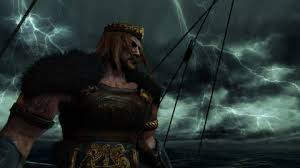
When first reading I didn’t expect to feel any type of emotion towards Grendel. I expected it to be a big story about how all he did was kill people and that’s it. I didn’t expect him to have real emotions. The portrayal of Grendel between both poems is vastly different. When reading Beowulf, he is portrayed to just be some big, ugly, dumb monster that lives to harass and spread terror, when in reality Grendel wanted acceptance and inner peace. He wanted answers to all his questions of his existence, which I can understand because everyone has that phrase, maybe for not as long as he did but still. It really just shows not to judge a book by his cover because anyone looking, would think he was just a monster with no real thought process.
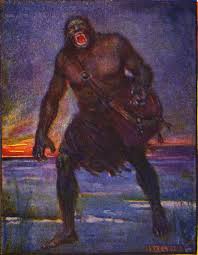
All in all, I enjoyed reading this poem and seeing everything from a new view. It really gives you insight on the differences in all the characters. I’m more than sure most people wouldn’t think of Beowulf the same, after reading Grendel. I strongly believe if people were nicer to Grendel, many of the events that happened, wouldn’t have happened. Hrthogar would still have some of his men, Grendel would’ve been alive and you never know, what if Grendel could’ve even helped Hrthogar is some way, but in the end that doesn’t happen. Beowulf still kills Grendel and the story still continues.
word count: 378
Beowulf Is That Bi….
Beowulf definitely lived up to all the hype. It was an epic novel about an epic battle between good and evil. In my opinion, the two were definitely distinguishable, you were able to see who was good and who was bad. Beowulf himself was definitely the protagonist with a few bumps in the road, “A great hero” one might call him. It was really interesting reading this and seeing how he interacted with every other character. One thing I liked about Beowulf’s character is how much confidence he had, nothing can knock him down, which made him who he was.
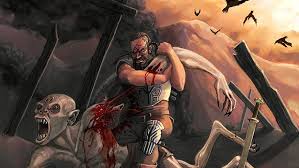
The evil, I feel was also very apparent in this epic poem. Characters like Grendel and Grendel’s mom really helped shape Beowulf. They also brought in a great deal of action to help the poem stay to its epic name. It was a great help to his character and showed the reader who he really was and what really mattered to him. He percerviered through all his challenges. Even through his battles he stayed who he was, and faught for his people, even being king didn’t change his views on much.
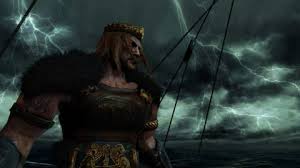
Overall, I though Grendel was a great read if you want suspense and action. It was a nonstop rollercoaster rides, even though it was very difficult to read at times. You learn to appreciate Beowulf through all his victories and boastfulness, because even though some (Unferth) didnt like Beowulf because of those tendacies, he was still a great warrior who faugh for all the right reasons.
Death: the end
Death is an unapologetic force of nature. Death is certain for everybody, no one is safe from It. So, why do we fear It as much as we do? Is it because even though It might be certain, we’re not? To clarify, I mean we’re not certain on what life (or death) is like on the other side of the spectrum. We know one side; our side. It makes sense though, doesn’t it? Everyone is so scared of the unknown, but for why? If you really think about it, Death is similar to a period. It is the ending of something, and right after that ends a whole new sentence pops up. It’s just a big cycle. That is the literal sense of death, But Death can also just be a metaphor, or a feeling. When I say feeling, I don’t mean you “feel” dead, what I mean is you can feel like you have mourned a friendship that was lost or anything related to that.

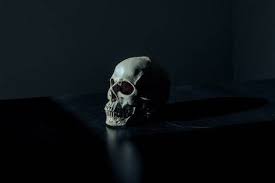
I think a great example of people being scared of Death and the uncertainty of it is Elegy for My Father Who is Not Dead, by Andrew Hudgins. The son is not ready to die, even though the father is the complete opposite. The father is ready to go, but the son still has life to live. I think that is also another reason why people are scared to die, they feel as if they haven’t lived life to the fullest. Which in many cases, people haven’t. Most people are creatures of habit and, sadly, sometimes those habits and boundaries keep us from living our best lives.
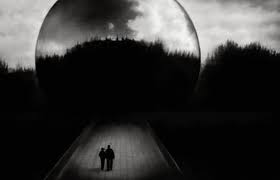
On the other side of the “not wanting to die” spectrum, is the “want to die” part, and this is where Night Mother, by Marsha Norman, fits right in. In Night Mother, Jessie wants to die. It’s quite ironic when you think about it, this whole blog was about how people don’t want to die partly because their life was unfulfilled, but Jessie WANTS to die BECAUSE her life was unfulfilled. It’s very contradicting, but hey, life (or death) is funny like that. Anywho, she feels that life is pointless, and that is a way of feeling dead, in my opinion. In the play, it tells us how she has contemplated suicide for about 10 years (this is where the feelings part comes into play) in those ten years she mourned herself, she mourned her life and what has become of it. So whenever she was finally done, was when she was ready. Since the feeling of mourning has already gone through, she was just a body. Once that sticks into your head, it’s a possibly impossible to get out of. almost like gum on a shoe (just more serious of course). Sadly, the idea got stuck into Jessies head which led her to go through with killing herself.
All in all, it doesn’t matter who you are, what you are or anything related to that, Death will get you. It’s the sad, scary (at least for some people) truth.
word count:513
It’s All About Power
What is power? and why does everyone want it so bad? There can be various ways to answer this question but to put it simply power is what controls and can defines us. Power can be having more money than another person or even having more knowledge. Power can be a feeling too. It can feel like you have control over someone or something. Or you can feel the opposite, you can feel powerless, which is, when you don’t feel in control at all, almost like you’re free falling. Whichever one a person is at the moment, they’re both very strong feelings. In this blog I’m going to show some examples from the pieces my class has read on the effects of feeling power and powerlessness.
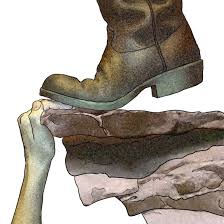
Sometimes people can be in control over some situations or other times people can be completely powerless and not know what to do. In the story “Where are you going, where have you been” by Joyce Carol Oates, it’s about a girl that is wild and acts out because her parents constantly compare her to her sister and she rebels against them and tend to think she’s better because of the comparison. A guy becomes fascinated with her and finds out everything about her life, he eventually uses it to manipulate her. The man uses only his words to get inside her head, this is a use of his power and trying to make her feel powerless, which he succeeds at. This girl could have had power but in the moment but instead she let herself be powerless because of how afraid she was. She could have easily done things to protect herself but he had control over her and manipulated her into thinking he was right and she eventually went with him. This whole story showed how easily people can be manipulated into giving up their power and freedom by a couple of sentences coming out of someone else mouth.
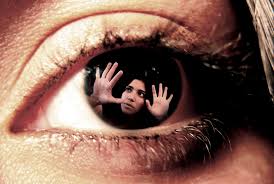
A story I really liked and thought was a good example at taking back the power was, “Persepolis” by Marjane Starapi. In this comic book style story a girl who, in my opinion, was dressed completely conservative got roadblocked almost on her way home by these older women who were basically supposed to keep things in order. Well these women didn’t approve of what she was wearing and were going to take her away. The young girl then manipulated them into letting her go. In this story the little girl took her powerlessness, and twisted and turned it into power. She could have felt bad and let them take her and gotten into real trouble, like how the girl in the first story let herself get manipulated and kidnapped. Instead she stood up and used her brain power to get out scratch free. This shows even in situations where you feel you might not have power, you do. People just need to dig a little deeper to find their power sometimes.
Word Count: 501
What Really Is A “Rite of Passage”? and Why Is It So Important?
To start this off, a rite of passage is like a big step for you in your life, a milestone, an event of epic proportions (at least for you). A rite of passage is a coming of age, where you learn to ride a bike, learn to drive, even little things can be one, like starting high school or learning how to read. Things like this are important to people because it shows you’re getting older/coming of age. In no way is everyone the same, so some of these things listed people might not look at as a rite of passage, but others might. That’s one thing I do like about these “rites of passages”, it’s all up to interpretation. Everyone has a rite of passage, we all accomplish something big or have something happen to us that is really important. I mentioned how it deals with your interpretation, an example of this is to some people a rite of passage can be about meeting a goal. So, if someone was losing weight and they finally met their weight goal, that can be a rite of passage to them. There is no way to know what others think is their rite of passages unless they speak about it.
Out of all the text, we have read the common idea of them is how they all grew and did something big or meaningful for themselves or had an event which led to a meaningful change. The characters all made a big step in life. For example in “Snow”, by Julia Alvarez, deals more on the side of a significant event happening for the character to go through her rite of passage. Actually, more you read the piece you can see there are many rites of passages deep in it. A couple can include learning English, coming to America, then the final one (and the one we’re really gonna focus on) her seeing snow for the first time. Even in this little but yet significant moment there can be a couple different rites of passages identified. What I mean by this is she had a physical rite of passage and a mental one. The physical one can be the actual act of her seeing and learning what snow is, and the mental one can be how her mind opening up to the concept of little pieces of ice coming from the sky and what else this “new” world has in store for her to experience.

Another part of the rites of passages journey is how they all form you as a person. These passages make you who you are because they’re the experiences and lessons you have learned from. A perfect example of combining all your memories/lessons/feelings is in the short story “Eleven” by Sandra Cisneros. In a nutshell a little girl talks about how she is not just one thing but is many things and that is because of her age. There is a quote from this story that I really like; “…when you’re eleven, you’re also ten, and nine, and eight, and seven, and six, and five, and four, and three, and two, and one.” I like this because she is saying, in my opinion, you don’t suddenly forget who you are or the things you’ve learned because a day changes. The things you learn pile and pile up and the pile makes up who you are. In the end that is all these rites of passages lead you too, finding who you are and making up yourself as a person.
Word Count : 591
The Topic Everyone is Writing About
Welcome back, guys! Today’s topic is Parent-Child Relationships and what they should mean to everyone. Parents work hard to provide us with everything we need and the poems toward the end were a real eye-opener, such as Those Winter Sundays,about how we all treat our parents. I have a job and now that I spend my own money and such, I see how expensive everything is. Even simple things cost a lot, depending on what quality you want. I think about all the times in my childhood where I would be upset with something because I didn’t have it or I’d throw away food that could’ve been eaten by someone else. The revelation has come to me. I am/was a brat. Our parents work hard to provide us with food, shelter, and the clothes on our back and we need to understand that we need to appreciate them more for what they do. When reading about how hard some families have it and it makes me grateful for the many opportunities that I have, as well as my family.

In addition to that mini-lesson, I’d like to take a moment to reflect on a few of the short stories that I didn’t mention in my paper. I’d like to say for the record, that Tillie Olsen needed to talk to her daughter and fix things before she got a PHONE CALL about it because someone else was more concerned. It’s crazy how she couldn’t be bothered with her daughter. As someone who has bumped heads and has been distant from my mom, I know how important communication is in a parent-child relationship. These are lessons we expect older people to understand, but sometimes they don’t and many children need to realize communication is a two way street. I am sure that if the mother and daughter had more meaningful conversations, the mother wouldn’t feel so lost when being asked about hr daughter. Yes, kids take on their own lives, but the parent needs to be aware of what’s happening in most of it, as long as they are still a child. I think this is something many people can relate too. I know everyone has their own set of special issues with their parents. But, as a family, we need to learn to help or at least recognize these issues.
To wrap it up in total, there were many great lessons and even things that made me self-reflect on my relationships with each of my parents. You know the saying about how everyone is like a snowflake? Well, each parent-child relationship is like one also. They each come with their own sets of problems, but they also come with their own sets of positive things too. We just have to take the good times with the bad and make the most out of the situations. I can relate that to Two Kinds, Jing-Mei took the bad with the good, not in the most positive way but she still did it. After having all those bad times with her mother, she found who she was and who she didn’t want to be. If her mother was absent and didn’t have her striving, she wouldn’t have failed at different things and learn different aspects and attributes about herself. Our parents are our biggest contributors to who we are and who we become, whether we realize it or not. Thank you for coming to my TED talk.
Word Count : 575
How To Read Literature Like a Professor – Helpful or Glorified?
“How to Read Literature like a Professor” is a very useful book. I think that instead of having read a textbook, this book gives eye-opening advice. Some of the things in chapters that I found eye-opening was the seasons and geography. Specifically how simple things like surroundings have meanings and effect the stories. Instead of reading a textbook, I feel like this book was an even better alternative.
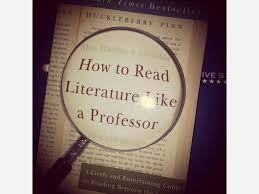
The biggest thing that I learned from this book was that not everything is what it seems but besides that I also had a realization that these don’t only apply to literature but to movies too. Even though I was confused at times reading this, I feel like I can better analysis movies as well. People don’t have to be straightforward but since most people should know these symbols. What I am trying to say is that Foster’s advice gave me a better understanding of a lot of things not just limited to literature. This book helps a lot with everything. The explanations and examples he gives in the chapters are interesting because I knew some of the examples but I didn’t see them in that way.

One of my favorite talks we had in class, was the discussion on the chapter, Marked for greatness. I think that that chapter was my favorite because it gave so much insight into things you just thought were there yet they were purposely placed there. I remember in one of the early chapters, Foster discussed how characters are not real people and that readers bring them to life. After knowing that and then the thing about marks on body features blows my mind. Overall, my greatest takeaway was all the lessons that I learned in a few short weeks than just learning this through natural progression.
(aye-list-uh)
Hi y’all. This is my blog! As you can see, up above is the pronunciation of my blog name. I thought it was funny because my name is Alyssa and I made it sound like A-lister but with an uh at the end, I don’t know I thought it was a fun play of words. Anywaysss, y’all know my name now, so here is some other information of my life. I’m a junior in high school and enjoy working out, sleeping, and I absolutely adore music, much like the rest of you. I am proceeding to do this blog to give y’all a take on my thoughts of different literature. This should be really interesting since I have many different opinions and it is going to be a good time being able to express them on my own platform.
 alistuh's blog